
吳昇光 Sheng-Kuang Wu
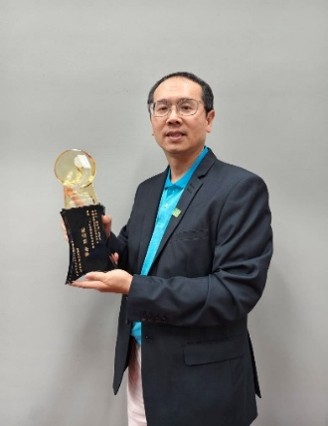
吳昇光
職稱:教授
學歷:英國羅弗堡大學運動科學博士
專長:運動醫學、適應運動、運動物理治療、兒童動作科學、桌球
實驗室名稱: 競技運動科學與科技研究群
聯絡方式:03-5715131分機61104
信箱:skwu@mx.nthu.edu.tw
英文姓名
Title: Professor
Education: PhD in Sport Science, Loughborough University, England
Expertise: Laboratory: elite sport science and technology research
Contact: +886-3-5715131 ext.
Email: skwu@mx.nthu.edu.tw
一、經歷
- 國立清華大學運動科學系教授 (2026.08 ~ 至今)
- 國立臺灣體育運動大學競技運動學系教授 (2005.08 ~ 2026.7)
- 中國醫藥大學物理治療學系教授 (2003.8-2005.7)
- 中國醫藥大學物理治療學系副教授 (2000.1-2003.8)
- 國際桌球總會醫學及分級主席 (2017-2027)
- 澳洲昆士蘭大學訪問教授 (2022.12 – 2023.7)
- 加拿大馬克馬斯特大學訪問教授 (2010.8 -2011.7)
- 臺灣身體活動與運動科學學會創會理事長 (2012. 3- 2017. 5)
Professional Experience
- Professor, Department of Exercise Science, National Tsing Hua University (Aug. 2026 – Present)
- Professor, Department of Sport Performance, National Taiwan University of Sport (Aug. 2005 – July 2026)
- Professor, Department of Physical Therapy, China Medical University (Aug. 2003 – July 2005)
- Associate Professor, Department of Physical Therapy, China Medical University (Jan. 2000 – July 2003)
- Classification officer, International Table Tennis Federation (2017-2027)
- Visiting Professor, University of Queensland, Australia (Dec. 2022 – July 2023)
- Visiting Professor, McMaster University, Canada (Aug. 2010 – July 2011)
- Chairman, Taiwan Society of Physical Activity and Exercise Science (Mar. 2012 - May 2017)
二、獲獎及專利
- 2026 國際桌球總會一百年傑出貢獻獎 (Merit Award, International Table Tennis Federation)
- 中山醫學大學傑出校友、國立體育大學傑出校友、台中市雙十國中傑出校友
- 2024於法國巴黎帕運會受邀三擊棍開場、桌球比賽大會頒獎人
- 1996-2024連續擔任八屆帕運會國際官員;2021東京帕運會後承蒙蔡英文總統及賴清德副總統接見,2024巴黎帕運會後承蒙賴清德總統及蕭美琴副總統接見。
- 2024-2026 共獲七次運動部/體育署運動科學學術獎勵
- 2023 於日本東京HYPE-GVA 運動科技加速器獲 Special Award
- 1995-1999 教育部公費留學獎學金
- 運動姿勢分析系統,發明人:許永和、陳裕芬、吳昇光,台灣發明專利,I713890,2020/12/21-2038/8/30
- 桌球發球機系統,發明人:許永和、陳裕芬、吳昇光、吳承彬、吳承育、陳哲甫,台灣新型專利,M600173,2020/8/21-2030/5/7
- 運動狀態分析系統,發明人:許永和、陳裕芬、吳昇光,台灣新型專利,M615550,2020/8/11-2031/4/8
- 雙向回饋桌球發球系統,發明人:許永和、陳裕芬、吳昇光,台灣新型專利,M619732,2021/11/11- 2031/4
- 桌球擊球分析系統,發明人:許永和、陳裕芬、吳昇光,台灣新型專利 ,M626597,2022/5-2031/11
- 桌球姿勢分類方法及桌球互動系統,發明人:許永和、陳裕芬、吳昇光,台灣發明專利,I797014, 2023/3/21-2042/5/15
- 運動敏捷度分析系統及運動協調度與敏捷度分析系統,發明人:許永和、陳裕芬、吳昇光,台灣發明專利, I835555, 2024/3/11-2043/2/9
- 敏捷度分析系統及敏捷度分析方法,發明人:許永和、陳裕芬、吳昇光,台灣發明專利,I878032, 2025/3/21-2044/5/15
- 棒球量測分析系統,發明人:許永和、吳昇光,台灣新型專利,M675833,2025/10/11-2035/6/24。
- 發球機系統,發明人:許永和、吳昇光、陳姿云、郭觀泰、陳逸軒、黃旭生,台灣發明專利,I891597675833,2025/7/21-2045/2/19
Awards and Patents
- 2026 Merit Award, International Table Tennis Federation (ITTF 100 Years)
- Outstanding Alumnus in Chung Shan Medical University, National Taiwan Sport University, Hsiung-Shih Secondary School
- Three hit in open para table tennis event at the 2024 Paris Paralympic Games
- 8 times Official staff at the Paralympic Games (1996-2024). President Tsai met after the 2021 Tokyo Paralympic Games and President Lai and Vice President Hsiao met after the 2024 Paris Paralympic Games.
- 7 times Sport Science Publication award, Ministry of Sport, Taiwan.
- 2023 special award of HYPE-GVA in Tokyo, Japan
- Full Scholarship in Ministry of Education, Taiwan (1995-1999)
10 patents in sport technology
三、學術著作目錄 (Publication)
國際期刊論文 (SSCI/SCI/國際官方期刊)
- Sheu, Y. H., Lee, S. H., Wu, C. B, Wu, S. K., Huang, Y. F., & Hsieh, C. H. (2026). Performance of low-cost TinyML embedded systems for real-time classification of table tennis strokes. Electronics, 15, 2679. (SCI, Q2, IF=2.6 in 2024) https://www.mdpi.com/2079-9292/15/12/2679/pdf
- Sheu, Y. H., Tai. L. W., Chang, L. C., Chen, Z. Y., & *Wu, S. K. (2026). Millimeter-Wave radar and mixed reality virtual reality system for agility analysis of table tennis players. Computers, 15(1), 28. (SCI, Q2, IF=4.2 in 2024) https://doi.org/10.3390/computers15010028
- Sheu, Y. H., Huang, C. Y., Tai. L. W., Tai, T. H., & *Wu, S. K. (2026). Skill classification of youth table tennis players using sensor fusion and the random forest algorithm. Big Data and Cognitive Computing, 10(2), 62. (SCI, Q1, IF=4.4 in 2024) https://doi.org/10.3390/bdcc10020062
- Chen, H. H., Chou, C. Y., Sheu, Y. H., *Chen, Z. H., Sun, M. T., & Wu, S. K. (2025). TTSwing: A dataset for table tennis swing and racket kinematics analysis. Scientific Data, 12(1), 339. (SCI, Q1, IF=5.8 in 2023, citation 2 times) (FWCI=4.06)
- Hsu, M. H., Liu, Y. Q., & *Wu, S. K. (2025). Exploring technical and tactical differences between a top table tennis player with an intellectual disability and an able-bodied player: Application of the 3S theory. Global Journal of Intellectual and Developmental Disabilities, 14(2), 555882. (IF=1.604 in 2023) 獲2025年運動部運科著作獎勵佳作
- Li, Y. C., Song, T. F., Liew, E. W., & *Wu, S. K. (2025). Tracking aerobic and anaerobic fitness in table tennis players with various athletic levels: A two-year study. International Journal of Sport Sciences and Coaching, online publication. (28 October 2025; SSCI, Q2, IF=2.1 in 2024)
- Liu, J. W., Hsu, M. H., Lai, C. L. & *Wu, S. K. (2025). A novel framework for table tennis match analysis: Combining 3S theory, video analysis, and big data analytics. Journal of Mechanics in Medicine and Biology, 25(5), 2540045. https://doi.org/10.1142/S0219519425400457. (SCI, Q4, IF=0.8 in 2023, citation 1 time) (FWCI=1.27)
- Liu, J. W., Hsu, M. H., Lai, C. L. & *Wu, S. K. (2024). Using video analysis and artificial neural network to explore association rules and influence scenarios in elite table tennis matches. Journal of Supercomputing, 80(4), 5472-5489. https://doi.org/10.1007/s11227-023-05684-4. (SCI, Q2, IF=2.5 in 2023, citation 4 times) (FWCI=0.35)
- Wu, S. K., Song, T. F., Li, Y. C., & *Sheu, Y. H. (2024). Combining wheelchair table tennis classes 4 and 5: A performance-based perspective on classification. Global Journal of Intellectual and Developmental Disabilities, 13(3), 555863. (IF=1.604 in 2023)
- Li, Y. C., Tseng, Y. T., Hsu, F. Y, Chao, H. C., & *Wu, S. K. (2023). Developmental coordination disorder and unhealthy weight status in Taiwanese children: The roles of sex and age. Children, 10, 1171. (SCI, Q2, IF=2.0 in 2023, citation 6 times) (FWCI=1.44)
- Sheu, Y. H., Wu, K. C., & *Wu, S. K. (2023). The use of intelligent racket to objectively measure abilities of a table tennis player with an intellectual impairment: A case study. Global Journal of Intellectual and Developmental Disabilities, 10(5), 555836. (IF=0.76 in 2021) 獲2024年體育署運科著作獎勵甲等
- Tsai, Y. H., Wu, S. K., Yu, S. S., & *Tsai, M. H. (2023). A novel hybrid deep neural networks: For predicting athlete performance using dynamic brain waves. Mathematics, 11(4), 903 (SCI, Q1, IF=2.3 in 2023, citation 4 times). (FWCI=0.80)
- Tran, H. T., Tseng, Y. T., Chen, S. Y., Wu, S. K., & *Li, Y. C. (2023). Moderation of parental socioeconomic status on the relationship between birth health and developmental coordination disorder at early years. Frontiers in Pediatrics, 11, 1020428. (SCI, Q2, IF=2.1 in 2023, citation 9 times) (FWCI=1.44)
- Sheu, Y. H. & *Wu, S. K. (2022). Application of technology in precision measurement of players with impairments: True abilities or intentional misrepresentation. Global Journal of Intellectual and Developmental Disabilities, 9(5), 555772. (IF=0.76 in 2021)
- Tsai, Y. H., Wu, S. K., Yu, S. S., & *Tsai, M. H. (2022). Analyzing brain waves of table tennis players with machine learning for stress classification. Applied Sciences, 12, 8052. (SCI, Q1, IF=2.838 in 2021, citation 18 times) 獲2024年體育署運科著作獎勵佳作 (FWCI=1.20)
- Li, Y. C., Chen, W. Y., Zhu, Y. C, & *Wu, S. K. (2021). Can the finger-nose-finger task be used to identify school-aged children with probable developmental coordination disorder?. International Journal of Disability, Development and Education, 68(4), 554-565. (SSCI, Q2, IF=1.543 in 2020)
- Wu, S. K. (2021). Athletes with intellectual impairments and high performance in Tokyo Paralympic Games: A classification-related issue. Global Journal of Intellectual and Developmental Disabilities, 8(4), 555742. (IF=0.76 in 2021, citation 2 times)
- Wu, S. K., Li, Y. C., Song, T. F., Chang, Y. C., & Wu, K. C. (2021). Analysis of the table tennis specific test in classification for players with an intellectual disability. Global Journal of Intellectual and Developmental Disabilities, 9(3), 555764. (IF=0.76 in 2021)
- Chien, Y. C., Hsu, C. T., Wu, S. K., & Hsu, M. H. (2020). 3S theory for case analysis: Tactical characteristics of two talented young table tennis players. Journal of Chung-Hsiung Physical Education, 19, 41-58. (citation 4 times)
- Wu, S. K. (2020). Classification, impairments, and research in Para table tennis: Past, current, and future. Proceeding books of the 16th ITTF Sport Science Congress (pp. 361-366), Lausanne, Switzerland: International Table Tennis Federation.
- Chen, W. Y.,*Wu, S. K., Song, T. F., Chou, K. M., Wang, K. Y., Chang, Y. C., & Goodbourn, P. T. (2017). Perceptual and motor performance of combat-sport athletes differs according to specific demands of the discipline. Perceptual and Motor Skills, 124(1), 293-313. doi:10.1177/0031512516681342 (SSCI, Q3, IF=1.647 in 2021, citation 31 times) (FWCI=0.33)
- Chen, F. C., Tsai, C. L., Chang, W. D., Li, Y. C., Chou, Y. C., & Wu, S. K. (2015). Postural control of anteroposterior and mediolateral sway in children with probable developmental coordination disorder. Pediatric Physical Therapy, 27(4), 328-335. (SCI, Q2, IF=3.049 in 2021, citation 14 times) (FWCI=0.49)
- Chen, F. C., Tsai, C. L., & Wu, S. K. (2014). Postural sway and perception of affordances in children at risk for developmental coordination disorder. Experimental Brain Research, 232(7), 2155-2165. (SCI, Q3, IF=1.972 in 2021, citation 21 times) (FWCI=0.43)
- Zhu, Y. C., Cairney, J., Li, Y. C., Chen, F. C., Chen, W. Y., &*Wu, S. K., (2014). High risk for obesity in children with a subtype of developmental coordination disorder. Research in Developmental Disabilities, 35, 1727-1733. (SSCI, Q2, IF=3.23 in 2021, citation 47 times) (FWCI=1.23)
- Chen, F. C., & *Wu, S. K. (2013). Perceived hole size, performance, and body movement during putting in children with and without probable developmental coordination disorder. Motor Control, 17, 382-398. (SCI, IF=1.422 in 2021, citation 10 times) (FWCI=0.24)
- Chen, W. Y., Wilson, P. H., & *Wu, S. K. (2012). Deficits in the covert orienting of attention in children with development coordination disorder: Does severity of DCD count? Research in Developmental Disabilities, 33, 1516-1522. (SSCI, Q2, IF=3.23 in 2021, citation 32 times) (FWCI=0.97)
- Li, Y. C., *Wu, S. K., Cairney, J., & Hsieh, C. Y. (2011). Motor coordination and health-related physical fitness of children with developmental coordination disorder: A three-year follow-up study. Research in Developmental Disabilities, 32(6), 2993-3002. (SSCI, Q2, IF=3.23 in 2021, citation 101 times) (FWCI=1.64)
- Wu, S. K., Cairney, J., Lin, H. H., Li, Y. C., & Song T. F. (2011). Pulmonary function in children with developmental coordination disorder. Research in Developmental Disabilities, 32, 1232-1239. (SSCI, Q2, IF=3.23 in 2021, citation 23 times) (FWCI=0.55)
- Zhu, Y. C., *Wu, S. K., & Cairney, J. (2011). Obesity and motor coordination ability in Taiwanese children with and without developmental coordination disorder. Research in Developmental Disabilities, 32, 801-807. (SSCI, Q2, IF=3.23 in 2021, citation 106 times) (FWCI=3.01)
- Sun, S. H., Zhu, Y. C., Shih, C. L., Lin, C. H., & *Wu, S. K. (2010). Development and initial validation of the preschooler gross motor quality scale. Research in Developmental Disabilities, 31, 1187-1196. (SSCI, Q2, IF=3.23 in 2021, citation 94 times) (FWCI=0.85)
- Wu, S. K., Lin, H. H., Li, Y. C., Tsai, C. L., & *Cairney, J. (2010). Cardiopulmonary fitness and endurance in children with developmental coordination disorder. Research in Developmental Disabilities, 31(2), 345-349. (SSCI, Q2, IF=3.23 in 2021, citation 101 times) (FWCI=3.27)
- Tsai, C. L., Pan, C. Y., Cherng, R. J., & Wu, S. K. (2009). Dual-task study of cognitive and postural interference: A preliminary investigation of the automatization deficit hypothesis of developmental coordination disorder. Child: Care, Health, and Development, 35, 551-560. (SCI & SSCI, Q2, IF=2.508 in 2021, citation 77 times) (FWCI=0.91)
- Tsai, C. L., Yu, Y. K., Chen, Y. J. & Wu, S. K. (2009). Inhibitory response capacities of bilateral lower and upper extremities in children with developmental coordination disorder in endogenous and exogenous orienting modes. Brain and Cognition, 69, 236-244. (SCI & SSCI, Q2, IF=2.31 in 2021, citation 31 times) (FWCI=0.64)
- Tsai, C. L., *Wu, S. K, & Huang, C. H. (2008). Static balance in children with developmental coordination disorder. Human Movement Science, 27, 142-153. (SCI, Q2, IF=2.161 in 2021, citation 124 times) (FWCI=1.35)
- Tsai, C. L., & *Wu, S. K. (2008). Relationship between visual-perceptual skills and coordinated movement performance in children with developmental coordination disorder. Perceptual and Motor Skills, 107, 457-472. (SCI & SSCI, Q4, IF=1.647 in 2021, citation 50 times) (FWCI=0.68)
- Tsai, C. L., Wilson, P. H., & *Wu, S. K. (2008). Role of visual-perceptual skills (non-motor) in children with developmental coordination disorder. Human Movement Science, 27, 649-664. (SCI, Q2, IF=2.161 in 2021, citation 202 times) (FWCI=2.46)
- Wu, S. K. (2004). International classification system in wheelchair basketball: The developmental process and problems. Taiwanese Journal of Adapted Physical Activity, 1, 79-92.
- Wu, S. K. (2001). Classifiers and social control in wheelchair rugby. Kaohsiung Journal of Medical Sciences, 17(2), 90-98. (SCI, Q3, IF=2.744 in 2020, citation 7 times)
- Wu, S. K., England, M., & Hsu, H. C. (2001). Physical therapists’ education on sport rehabilitation for people with spinal cord injury in the United Kingdom. Journal of Chinese Medical Science, 2(2), 179-186.
- Wu, S. K., & Williams, T. (2001). Factors influencing sport participation among athletes with spinal cord injury. Medicine and Science in Sports and Exercise, 33(2), 177-182. (SCI, Q1, IF=5.411 in 2021, citation 258 times)
- Wu, S. K., & Williams, T. (2000). Sport participation and athletes with spinal cord injury in the United Kingdom. Journal of Chinese Medical Science, 1(2), 97-104.
- Wu, S. K., Williams, T., & Sherrill, C. (2000). Classifiers as agents of social control in disability swimming. Adapted Physical Activity Quarterly, 17(4), 421-436. (SCI, Q2, IF=2.61 in 2020, citation 34 times)
- Wu, S. K., & Williams, T. (1999). Paralympic swimming performance, impairment, and the functional classification system. Adapted Physical Activity Quarterly, 16, 251-270. (SCI, Q2, IF=2.61 in 2020, citation 101 times) (FWCI=1.67)
TSSCI期刊論文 (Taiwan SSCI Journal)
- 廖尹雯、張立羣、宋岱芬、*吳昇光(2026)。比較不同層級與性別桌球選手在專項運動相關能力。運動表現學刊,13(1),23-40。(TSSCI)
- 莊明修、張立羣、*吳昇光(2024)。奧林匹克舉重之天賦鑑別與發展。中華體育季刊,38(4),315-326。(TSSCI)
- 宋岱芬、李曜全、江慶修、王佩凡、廖尹雯、*吳昇光 (2023)。競技桌球專項有氧測驗之信效度研究。大專體育學刊,25(3),313-332。(TSSCI) 獲2025年運動部運科著作獎勵佳作
- 吳昇光 (2023)。澳洲國家天賦確認與發展計畫之應用。大專體育學刊,25(4),i-vi。(TSSCI)
- 許銘華、簡嘉宏、*吳昇光、*吳俊霖(2023)。使用兩階段深度學習網路分析桌球軌跡追蹤與落點偵測。大專體育學刊,25(2),196-211。(TSSCI) 獲2024年體育署運科著作獎勵佳作
- 吳思嚴、李曜全、*吳昇光(2023)。臺灣兒童與青少年身體活動參與及競賽發展。大專體育學刊,25(2),i-viii。 (TSSCI)
- 吳思嚴、陳書芸、*吳昇光(2022)。舞蹈既是藝術亦是科學。大專體育學刊,24(2),i-vi。 (TSSCI)
- 宋岱芬、江慶修、廖尹雯、陳威穎、*吳昇光(2022)。優秀大專選手視覺認知的比較研究。大專體育學刊,24(2),254-270。 (TSSCI)
- 張立羣、黃湘涵、郭智翔、*吳昇光(2022)。桌球專項敏捷性測驗之信度與效度。大專體育學刊,24(3),418-431。(TSSCI) 獲2023年體育署運科著作獎勵佳作
- 廖尹雯、陳威穎、江慶修、宋岱芬、*吳昇光(2022)。不同截擊性運動選手的多物體追蹤能力。大專體育學刊,24(4),530-545。(TSSCI)
- 廖尹雯、陳威穎、江慶修、宋岱芬、*吳昇光(2022)。桌球選手慣用手對側視野物體追蹤能力之影響。大專體育學刊,24(3),391-405。 (TSSCI)
- 許銘華、于承煥、許英霖、蔡亞倫、*吳昇光(2022)。基於3S理論與機器學習技術於頂尖混雙桌球選手接發球技戰術分析-林昀儒/鄭怡靜之個案研究。大專體育學刊,24(4),563-583。(TSSCI) 獲2023年體育署運科著作獎勵佳作
- 吳昇光(2021)。臺灣運動科學界更要講求「精準」。大專體育學刊,23(2),i-iv。(TSSCI)
- 吳昇光、吳冠臻(2021)。從東京帕運會觀看高水準身障運動:運科可以幫忙。大專體育學刊,23(4),i-vi。(TSSCI)
- 吳思嚴、江慶修、宋岱芬、楊金桂、*吳昇光(2021)。優秀游泳選手之肺功能分析:一年追蹤研究。大專體育學刊,23(4),450-463。(TSSCI)
- 廖尹雯、江慶修、*吳昇光(2021)。多物體追蹤任務與競技運動。中華體育季刊,35(3), 187-196。(TSSCI)
- 李曜全、朱怡菁、*吳昇光(2019)。發展協調障礙兒童心理健康問題之可能機轉及其應用。大專體育,150,10-18。
- 吳昇光、李曜全、陳威穎、吳思嚴、宋岱芬、陳薇宇、*黃明祥(2014)。優秀持拍運動選手之視覺訊息處理能力。大專體育學刊,16(2),226-233。(TSSCI)
- 蔡佳良、黃啟煌、*吳昇光(2005)。不同定義之慣用腳靜態平衡力、對地反作用力及速度之探討。大專體育學刊,7(2),227-240。(TSSCI)
- 蔡佳良、*吳昇光、蔡志權、黃啟煌,鄭勵君(2005)。國小和國高中體育教師指導身心障礙學生之態度分析。大專體育學刊,7(1),25-36。(TSSCI)
- 陳俊忠、*吳昇光(1991)。優秀舉重選手膝伸肌與屈肌等速肌力之分析。體育學報,13,147-153。(TSSCI)
四、專案計畫 (Project)
2026/01/01~2027/03/31 計畫主持人 (PI)
-
- 國科會補助編號 (NSTC 115-2425-H-007-006)
- 獲『 國科會 』補助
- 計畫名稱:從台灣邁向國際:結合資訊科技與運動醫學的智慧桌球整合型研究(4/4)
2025/01/01~2025/12/31 計畫主持人 (PI)
-
- 國科會補助編號 (NSTC 114-2425-H-028-003)
- 獲『 國科會 』補助
- 計畫名稱:從台灣邁向國際:結合資訊科技與運動醫學的智慧桌球整合型研究(3/4)
2024/01/01~2024/12/31 計畫主持人 (PI)
-
- 國科會補助編號 (NSTC 113-2425-H-028-003)
- 獲『 國科會 』補助
- 計畫名稱:從台灣邁向國際:結合資訊科技與運動醫學的智慧桌球整合型研究(2/4)
2023/01/01~2023/12/31 計畫主持人 (PI)
-
- 國科會補助編號 (NSTC 112-2425-H-028-003)
- 獲『 國科會 』補助
- 計畫名稱:從台灣邁向國際:結合資訊科技與運動醫學的智慧桌球整合型研究(1/4)
2022/12/28~2023/7/31 計畫主持人 (PI)
-
- 國科會補助編號 (NSTC 111-2918-I-028-002)
- 獲『 國科會 』補助國外短期研究
- 計畫名稱:澳洲運動天分確認與發展體制與成功應用
2026/08/01~2027/07/31 計畫共同主持人 (Co-PI)
-
- 國科會補助編號 (NSTC)
- 獲『 國科會 』補助
- 計畫名稱:發展協調障礙兒童內化問題之生理指標建構與不同運動類型介入效益之評估 :生命歷程觀點 (II-2)
2025/08/01~2026/07/31 計畫共同主持人 (Co-PI)
-
- 國科會補助編號 (NSTC)
- 獲『 國科會 』補助
- 計畫名稱:發展協調障礙兒童內化問題之生理指標建構與不同運動類型介入效益之評估 :生命歷程觀點 (II-1)
2025/08/01~2026/07/31 計畫共同主持人 (Co-PI)
-
- 國科會補助編號 (NSTC)
- 獲『 國科會 』補助
- 計畫名稱:以深度學習建構桌球得失分預測模型的情境規則訓練模式
2025/08/01~2026/07/31 計畫共同主持人 (Co-PI)
-
- 國科會補助編號 (NSTC)
- 獲『 國科會 』補助
- 計畫名稱:基於機器學習之運動員選才、育才科學輔助培育系統-以桌球運動為例
2024/08/01~2025/07/31 計畫共同主持人 (Co-PI)
-
- 國科會補助編號 (NSTC)
- 獲『 國科會 』補助
- 計畫名稱:以進階動作技巧來探索動作適能對於青少年身體活動與學業壓力的新關係
2024/08/01~2025/07/31 計畫共同主持人 (Co-PI)
-
- 國科會補助編號 (NSTC)
- 獲『 國科會 』補助
- 計畫名稱:發展協調障礙兒童內化問題之生理指標建構與不同運動類型介入效益之 評估:生命歷程觀點(第二年)
2023/08/01~2024/07/31 計畫共同主持人 (Co-PI)
-
- 國科會補助編號 (NSTC)
- 獲『 國科會 』補助
- 計畫名稱:發展協調障礙兒童內化問題之生理指標建構與不同運動類型介入效益之 評估:生命歷程觀點(第一年)